
Executive Summary
Modern conflict no longer resolves itself through kinetic force alone. The decisive spaces of contemporary warfare extend across the electromagnetic spectrum, cyberspace, the information environment, and the cognitive domain, alongside the physical domains of land, sea, air, and space. Integrated kinetic and non-kinetic effects planning represents the doctrinal and operational discipline through which joint forces synchronize physical destructive power with effects that degrade, deceive, disrupt, or influence without necessarily expending munitions. This white paper establishes the foundational concepts, terminology, planning frameworks, organizational requirements, legal constraints, and emerging challenges associated with that discipline.
The paper argues that meaningful integration, as distinguished from mere coordination, requires four conditions: common effects language across all capabilities, nested authority structures that reduce approval latency, shared situational awareness infrastructure spanning both kinetic and non-kinetic targeting chains, and institutional cultures that treat electromagnetic warfare, cyberspace operations, and information-related capabilities as fires rather than support functions. Failure in any of these conditions degrades convergence and allows adversaries operating with more unified command authority to achieve decision superiority.
Contemporary operational experience, particularly in the Russia-Ukraine conflict, and recent organizational changes at the Joint Staff level confirm that integrated effects planning is no longer an aspirational concept. It is a current operational requirement. This paper provides practitioners and analysts a structured reference for understanding what integration demands, why it is difficult, and where the most consequential gaps remain
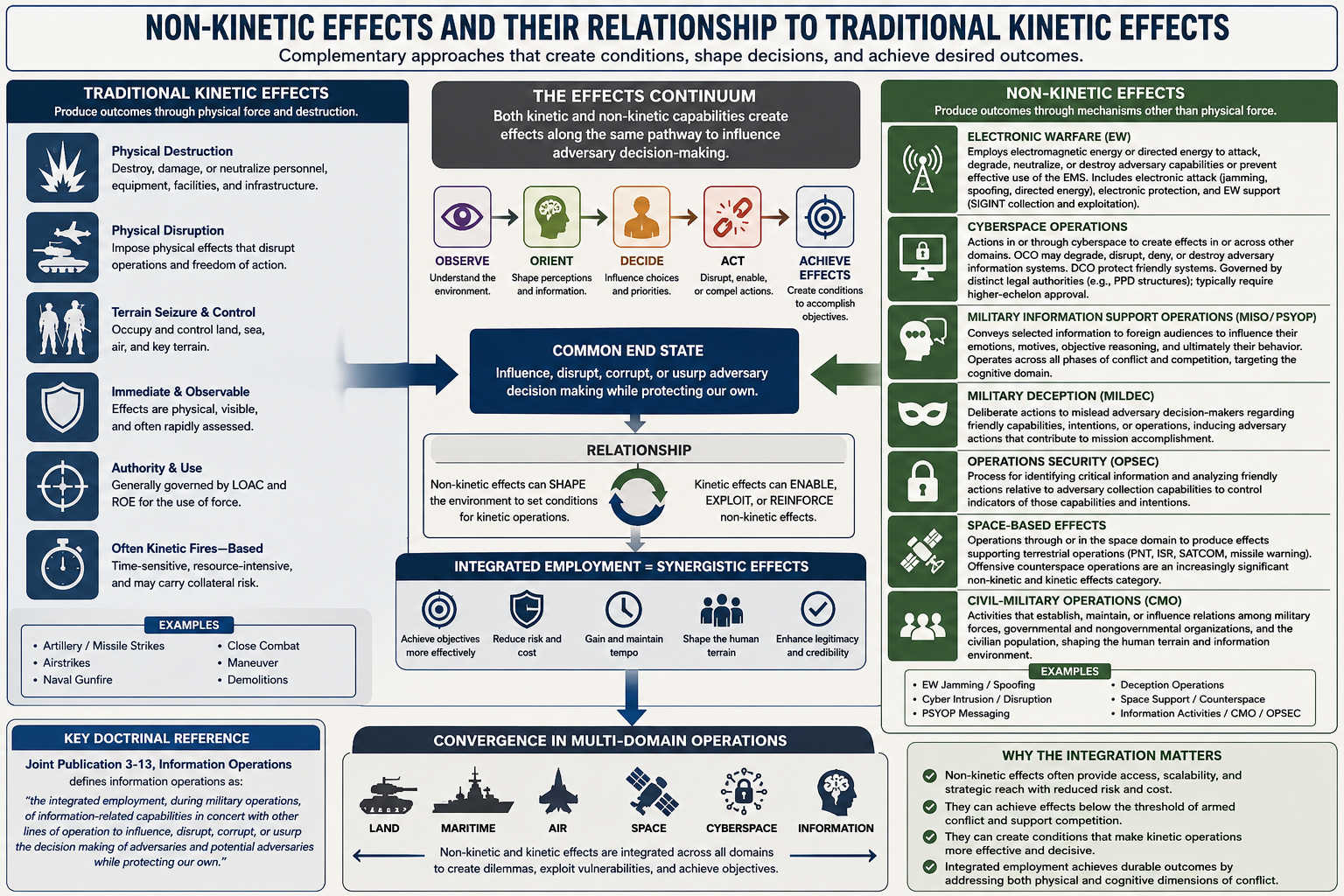
Figure 1. Non-kinetic effects and their relationship to traditional kinetic effects
I. Introduction
The character of armed conflict has changed materially since the Gulf War era introduced effects-based thinking to Western military doctrine. Where earlier frameworks often treated kinetic fires as the default instrument of operational power and information-related activities as adjunct or enabling functions, contemporary doctrine across the United States, NATO, and allied partners recognizes a fundamentally different relationship. Kinetic and non-kinetic capabilities are now understood as complementary instruments within a unified effects architecture, each capable of shaping conditions for the other and, in combination, capable of generating effects neither could achieve independently.
The terminology itself has evolved considerably. The phrase "non-kinetic" serves as a broad umbrella covering capabilities whose effects do not rely primarily on the release of stored explosive energy. Electronic warfare, cyberspace operations, military information support operations, military deception, operations security, space-based effects, and civil-military operations all qualify as non-kinetic under current joint doctrine. Each operates through distinct physical or cognitive mechanisms, carries distinct legal and policy authorities, and involves distinct timelines, reversibility profiles, and assessment challenges. Planning frameworks must account for this diversity while producing synchronized effects within operationally relevant windows.
Orchestration, as distinct from mere deconfliction or coordination, implies something more demanding: the deliberate, command-directed arrangement of multiple effects in time, space, and purpose such that their combined outcome exceeds what any single capability could produce. This document examines the conceptual, doctrinal, organizational, and technical foundations required to achieve genuine orchestration.
II. Defining the Effects Landscape
A. Kinetic Effects
Kinetic effects are those produced through the application of physical force, typically through munitions, missiles, directed energy weapons with destructive intent, or other platforms that produce effects by releasing stored energy against a target. The defining characteristic is physical impact: structural damage, personnel casualties, equipment destruction, or the denial of terrain through fire. Kinetic effects are generally visible, attributable, rapid in onset, and governed by well-established legal frameworks under the Law of Armed Conflict, including the principles of distinction, proportionality, and military necessity.
Kinetic targeting follows mature doctrine codified in Joint Publication 3-60, Joint Targeting, and its service-component equivalents. The joint targeting cycle provides a six-phase framework: end state and commander's objectives, target development, weaponeering and force assignment, force execution, operational assessment, and post-strike review. Battle damage assessment, probability of kill calculations, and collateral damage estimation all rest on decades of operational experience and structured methodologies.
B. Non-Kinetic Effects
Non-kinetic effects produce outcomes through mechanisms other than physical force. Joint doctrine groups relevant capabilities under several categories, each with distinct operational and legal characteristics.
• Electronic Warfare (EW): Operations employing electromagnetic energy or directed energy to attack personnel, equipment, or facilities with the intent to degrade, neutralize, or destroy adversary combat capability, or to prevent the adversary's effective use of the electromagnetic spectrum. EW encompasses electronic attack (jamming, spoofing, directed energy), electronic protection, and electronic warfare support (signals intelligence collection and exploitation).
• Cyberspace Operations: Actions in or through cyberspace to create effects in or across other domains. Offensive cyberspace operations (OCO) may degrade, disrupt, deny, or destroy adversary information systems. Defensive cyberspace operations (DCO) protect friendly systems. Cyberspace operations are governed by distinct legal authorities, including Presidential Policy Directive structures, and typically require higher-echelon approval than kinetic fires.
• Military Information Support Operations (MISO / PSYOP): Operations designed to convey selected information to foreign audiences to influence their emotions, motives, objective reasoning, and ultimately their behavior. MISO operates across all phases of conflict and competition, targeting the cognitive domain of adversary personnel and relevant non-combatant populations.
• Military Deception (MILDEC): Actions executed to deliberately mislead adversary decision-makers as to friendly capabilities, intentions, or operations, inducing adversary actions that contribute to mission accomplishment.
• Operations Security (OPSEC): A process for identifying critical information and subsequently analyzing friendly actions relative to adversary intelligence collection capabilities, to control indicators of those capabilities and intentions.
• Space-Based Effects: Operations through or in the space domain to produce effects supporting terrestrial operations, including positioning, navigation, and timing (PNT), intelligence, surveillance, and reconnaissance (ISR), satellite communications, and missile warning. Offensive counterspace operations represent an increasingly significant non-kinetic and kinetic effects category.
• Civil-Military Operations (CMO): Activities that establish, maintain, or influence relations among military forces, governmental and nongovernmental organizations, and the civilian population, shaping the human terrain and information environment.
C. The Kinetic-Non-Kinetic Relationship
The relationship between kinetic and non-kinetic effects is neither subordinate nor additive in simple terms. It is multiplicative when properly orchestrated. Non-kinetic effects can set conditions for kinetic action by degrading adversary sensors, communications, and command and control before a strike, reducing the adversary's ability to defend, disperse, or reconstitute. Kinetic effects can set conditions for non-kinetic exploitation by destroying communications relay nodes and forcing adversary forces to transmit in the clear, enabling signals intelligence collection and subsequent targeting. The two effect types also serve as substitutes in certain circumstances: where kinetic action would generate unacceptable collateral damage or escalatory risk, a cyber operation achieving equivalent denial of capability may be the preferred option, and vice versa where non-kinetic options lack confidence or reversibility is undesirable.
| Kinetic Effects | Non-Kinetic Effects |
|---|---|
| Physical destruction or damage to personnel, equipment, or infrastructure | Disruption, degradation, denial, deception, or influence without physical destruction |
| Generally irreversible; battle damage assessment is observable | Often reversible; effects may be temporary, delayed, or difficult to attribute |
| Legal authority well-established under Law of Armed Conflict | Authority structures vary by capability type; some require National Command Authority or higher-echelon approval |
| Rapid onset; effect is immediate upon munitions impact | Lead times vary widely; some cyber operations require weeks or months of preparation |
| Assessment via post-strike imagery and battle damage assessment | Assessment complex; effects on adversary cognition or systems may not be directly observable |
| Limited reusability; munitions expended on employment | Cyber effects especially may be single-use; EW can be employed repeatedly |
III. Doctrinal Framework for Integration
A. Effects-Based Thinking
The conceptual lineage of integrated effects planning traces to the Desert Storm air campaign of 1991, in which planners under then-Lieutenant Colonel David Deptula applied an effects-based approach to campaign design, targeting adversary functions rather than destroying platforms for their own sake. The goal was to collapse Iraqi command and control coherence and will to fight through the systematic denial of capabilities, not simply to accumulate battle damage. This approach influenced the doctrine that eventually became formal Effects-Based Operations (EBO) under U.S. Joint Forces Command in the early 2000s.
By 2008, Joint Forces Command under General James Mattis formally retired the EBO label, citing doctrinal confusion, overextension of the concept, and misapplication in ground-centric operations where systems complexity defied the modeling assumptions underlying formal EBO methodology. However, the core insight of effects-based thinking survived: that targeting decisions should be driven by the desired end state, not by platform-centric logic, and that effects in one domain produce cascading and second-order consequences across others. That insight now underpins Joint All-Domain Operations (JADO) and its predecessor concept, Multi-Domain Operations (MDO).
B. Joint All-Domain Operations and Convergence
The current doctrinal capstone for integrated effects is JADO, defined in Air Force Doctrine Publication 3-99 as "actions by the joint force in all domains that are integrated in planning and synchronized in execution, at the speed and scale needed to gain advantage and accomplish the mission." JADO's central operational concept is convergence: the rapid, coordinated application of capabilities across all domains to create synergistic effects that overwhelm adversary decision cycles and exploit fleeting windows of opportunity.
Convergence distinguishes JADO from its predecessors. Earlier multi-domain concepts emphasized integration at the planning level but tended toward sequential or parallel rather than genuinely simultaneous effects. Convergence demands that effects from cyber, electromagnetic warfare, space-based denial, and kinetic fires arrive within a sufficiently compressed time window that the adversary's decision-making architecture cannot respond to each in isolation. The adversary is confronted with multiple simultaneous dilemmas, a condition that defeats serial processing and degrades command coherence.
Achieving convergence imposes demanding requirements on command and control architecture, authority delegation, intelligence fusion, and communications resilience. The JADC2 strategy, promulgated in 2022, addresses the transport and C2 infrastructure dimensions of this requirement, emphasizing multi-level security, elimination of single points of failure, and real-time synchronization of kinetic and non-kinetic fires.
C. The Joint Targeting Cycle and Non-Kinetic Integration
The Joint Targeting Cycle (JTC), codified in JP 3-60, provides the primary procedural framework through which effects are planned, authorized, and executed at the operational level. The six phases are: (1) End State and Commander's Objectives, (2) Target Development and Prioritization, (3) Capabilities Analysis, (4) Commander's Decision and Force Assignment, (5) Mission Planning and Force Execution, and (6) Assessment. The cycle is iterative rather than linear, with assessment outputs feeding back into target development and objective refinement.
Non-kinetic effects have been progressively incorporated into the JTC framework, but this integration is incomplete and contested. U.S. Cyber Command, operating under its own authority structures derived from Presidential Policy Directives and Title 10 and Title 50 statutory authorities, has historically employed a modified version of the targeting cycle for cyberspace operations. An unclassified USCYBERCOM presentation confirmed this adaptation while noting significant tension between the JTC's kinetic-origin logic and the distinct lead times, reversibility considerations, and assessment challenges of cyber operations. Similar tensions exist for electronic warfare and space-based effects, each of which carries its own authority chain, classification requirements, and planning timelines that do not map cleanly onto the JTC's 72-hour Air Tasking Order rhythm.
The Targeting Working Group (TWG), an event within the joint force battle rhythm, serves as the primary mechanism for synchronizing kinetic and non-kinetic effects against the daily ATO cycle. The TWG assembles fires planners, information operations officers, electronic warfare coordinators, cyber planners (where authorities permit), and intelligence staff to deconflict and sequence effects. The TWG product, the Targeting Synchronization Matrix (TSM), translates commander guidance into time-phased engagement authorities across kinetic and non-kinetic capabilities.
D. The D3A Methodology
At the Army component and below, the Decide-Detect-Deliver-Assess (D3A) methodology provides the targeting framework. D3A is explicitly designed to be responsive to changing battlefield conditions and applies to the full range of fires, including joint fires, electronic attack, and information-related capabilities. The Decide phase translates commander objectives into High Payoff Targets (HPTs) and establishes engagement criteria. Detect specifies collection and cueing requirements. Deliver executes the assigned effects. Assess evaluates effectiveness and drives re-engagement or re-targeting decisions.
D3A's flexibility makes it well suited to integrated kinetic and non-kinetic synchronization at the division and below, where target signatures change rapidly and effects must be sequenced within hours or minutes rather than days. The Joint Air-Ground Integration Center (JAGIC) serves as the organizational node through which Army and Air Force targeting chains converge at the division level, enabling real-time deconfliction of airspace users and effects timelines.
IV. Integrated Effects Planning Process
A. Operational Art and Effects Sequencing
Integrated effects planning begins in the operational art phase, during which campaign designers identify the adversary's critical vulnerabilities across all domains and determine which combinations of kinetic and non-kinetic effects are most likely to collapse those vulnerabilities at acceptable cost and risk. This phase requires planners who understand both the capabilities and the constraints of each effect type: a cyber planner who understands artillery timelines, an electronic warfare officer who understands cyber authority structures, and a fires officer who understands PSYOP lead times.
The fundamental planning sequence for integrated effects follows a logic of preparation, execution, exploitation, and assessment. Non-kinetic preparation effects, such as electromagnetic spectrum suppression, cyber denial of adversary ISR, or PSYOP messaging to degrade unit cohesion, typically precede kinetic execution. Kinetic execution creates the physical conditions, such as radar destruction or communications node elimination, that expand exploitation opportunities for subsequent non-kinetic collection or influence operations. Assessment across both kinetic and non-kinetic lines drives re-targeting and re-messaging.
The Small Wars Journal's convergence window model illustrates this sequence analytically: planners visualize the lead times, durations, and residual impacts of all planned effects on a common timeline to ensure that effects arrive within the intended decision window and that deconfliction prevents friendly electromagnetic spectrum interference or premature disclosure of capabilities.
B. Target System Analysis
Effective integrated planning requires target system analysis that treats adversary capabilities as interdependent networks rather than isolated platforms. An adversary's command and control architecture, for example, consists of communication nodes (potentially vulnerable to cyber or electronic attack), physical infrastructure (potentially vulnerable to kinetic fires), personnel and their cognitive processes (potentially influenced by PSYOP), and organizational procedures (potentially exploited through deception). Disrupting any single node degrades the system; disrupting multiple nodes simultaneously across layers degrades it decisively.
This systems perspective requires Nodal Analysis (mapping system components and their interdependencies), Critical Node Identification (determining which nodes, if disrupted, produce the most significant degradation), Vulnerability Assessment (identifying which effect type best exploits each node's specific weakness), and Effect Selection (matching available capabilities to vulnerabilities based on authorities, lead times, and desired reversibility).
C. Authorities, Approval, and Execution Timelines
One of the most consequential practical challenges in integrated effects planning is the misalignment of approval authorities and timelines across capability types. Kinetic fires at the operational level typically require JFACC or JFLCC-level authority and can be executed within the 72-hour ATO cycle. Certain cyberspace operations require National Command Authority approval or specific statutory authorities that preclude delegation to theater-level commanders. Electronic attack against certain emitter categories may require coordination with interagency entities. Space-based effects may involve USSPACECOM authorities distinct from the theater combatant commander.
This authority fragmentation creates significant friction. Planners must build integrated effects sequences that account for the longest-lead authority requirement in the chain. An operation that requires a cyber effect to precede a kinetic strike by 48 hours cannot be executed on a 24-hour ATO cycle if the cyber approval chain requires 72 hours. Anticipatory planning, pre-authorization frameworks for likely contingencies, and delegated execution authorities within pre-approved parameters are the principal mitigations.
D. The Non-Kinetic Effects Cell
In January 2026, the Joint Staff publicly disclosed the establishment of a Non-Kinetic Effects Cell, described as designed to integrate, coordinate, and synchronize all non-kinetic capabilities into planning and execution of operations globally. This organizational development reflects recognition that non-kinetic effects have historically been planned in stovepipes, with electronic warfare, cyber, and information operations cells operating in parallel rather than in genuine integration. A dedicated cell with cross-functional membership provides the organizational mechanism to ensure non-kinetic effects appear in the same planning products, authority chains, and execution matrices as kinetic fires.
Service-component equivalents have existed in various forms for years: the Air Operations Center incorporates a Non-Kinetic Operations element; Army division headquarters maintains an information operations officer with access to the fires cell; Special Operations Forces maintain integrated planning architectures that blend kinetic and non-kinetic capabilities routinely. The Joint Staff-level cell represents a consolidation of this approach at the apex of joint operations planning.
V. Legal and Policy Dimensions
A. Law of Armed Conflict Applicability
All effects, kinetic and non-kinetic, must comply with the Law of Armed Conflict (LOAC). The core LOAC principles of distinction, proportionality, military necessity, and avoidance of unnecessary suffering apply regardless of the delivery mechanism. The application of these principles to non-kinetic effects, however, presents genuinely novel legal questions. A cyber operation that disables a power grid supplying both military command nodes and civilian hospitals may satisfy military necessity with respect to the military target while raising serious proportionality concerns with respect to civilian harm. The reversibility of the effect, its geographic scope, and the foreseeability of civilian impact all factor into legal review.
Electronic warfare presents distinct questions: jamming a communications network used by both military and civilian users requires analysis of whether the civilian use constitutes dual-use and whether the military advantage anticipated is proportionate to the civilian disruption. PSYOP operations targeting foreign audiences must comply with restrictions on deception directed at neutral parties and must remain within authorities established by applicable directives. Military deception, while explicitly authorized in doctrine, must be distinguished from perfidy, which is prohibited under Additional Protocol I to the Geneva Conventions.
B. Title 10 and Title 50 Authority Structures
In the U.S. legal framework, the distinction between Title 10 (Armed Forces) and Title 50 (War and National Defense) authority structures is central to integrated planning. Military operations, including offensive cyberspace operations conducted by U.S. Cyber Command, are generally authorized under Title 10. Covert intelligence activities authorized by the CIA operate under Title 50. Some non-kinetic operations, particularly in cyberspace and the information environment, occupy legal territory where both authorities are potentially applicable, creating coordination requirements between DoD and the intelligence community that add approval latency and classification complexity.
The practical consequence for integrated planning is that some highly capable non-kinetic effects are effectively unavailable to theater planners on operationally relevant timelines because their authority structures require approvals above the combatant command level. This structural constraint is deliberately conservative: national-level approval requirements reflect the escalatory potential, diplomatic sensitivity, and intelligence equities associated with certain non-kinetic capabilities. However, the constraint creates asymmetry between the authority available for kinetic fires and that available for certain non-kinetic alternatives, potentially biasing planners toward kinetic options even when non-kinetic effects would produce equivalent outcomes with fewer risks.
C. Escalation Management
Non-kinetic effects carry distinct escalation dynamics that planners must integrate into campaign design. A cyber operation targeting adversary nuclear command and control, even one intended as a deterrent or limited demonstration, carries escalatory potential that kinetic operations against equivalent conventional targets may not. Electronic attack that degrades adversary satellite communications may implicate systems shared with civilian navigation and safety infrastructure. PSYOP operations that extend to domestic audiences, even inadvertently, violate domestic legal constraints.
Escalation ladders for non-kinetic effects are less theoretically developed than those for nuclear weapons or conventional fires. Adversary thresholds for responding to cyber intrusion with kinetic force remain uncertain and contested in both doctrine and practice. The Russia-Ukraine conflict has generated evidence that adversaries calibrate their cyber operations to remain below thresholds likely to trigger conventional military responses, but the precise location of those thresholds is contested and context-dependent. Integrated planning must explicitly address escalation risk at each effects layer and include pre-established decision criteria for capability employment.
VI. Organizational and Cultural Requirements
A. Institutional Barriers to Integration
The doctrinal framework for integrated effects planning has matured substantially faster than the organizational and cultural conditions required to execute it. Service communities responsible for electronic warfare, cyberspace operations, and information operations have historically developed as distinct career fields with their own doctrine, training pipelines, professional organizations, and planning cultures. Kinetic fires practitioners operate with well-established procedures, understood timelines, and shared language. Non-kinetic practitioners often lack an equivalent common language with each other, let alone with kinetic fires planners.
The RAND Corporation's 2024 research on scaling non-kinetic capability integration identified several recurring institutional barriers: clearance and compartment access requirements that prevent cross-functional planning, a lack of common visualization tools that display non-kinetic effects alongside kinetic fires on the same operational picture, the absence of standardized measures of effectiveness for non-kinetic effects, and a professional military education system that has been slow to integrate non-kinetic effects into joint fires curricula.
B. Intelligence and Assessment Challenges
Assessment of non-kinetic effects remains one of the least mature areas of the discipline. Kinetic battle damage assessment, while imperfect, benefits from decades of methodology development, observable signatures (physical damage visible to imagery intelligence), and reasonably well-understood kill chain models. Non-kinetic effects assessment is fundamentally more difficult. The effects of a successful cyber intrusion may not be visible to the employing force for days or weeks. Electronic attack effects on adversary systems may be masked by adversary redundancy. PSYOP effectiveness at the population level cannot be assessed through overhead imagery and requires collection methods, such as signals intelligence and human intelligence, that are themselves subject to access constraints and analytical uncertainty.
This assessment gap has direct operational consequences: without reliable measures of effectiveness, commanders cannot confidently substitute non-kinetic effects for kinetic fires, and re-targeting decisions are made on incomplete information. Developing common assessment frameworks, investing in collection systems tailored to non-kinetic effects, and establishing credible effectiveness thresholds for each capability type are foundational requirements for mature integrated planning.
C. Workforce Development
Effective integrated effects planning requires personnel who possess sufficient understanding of multiple capability domains to facilitate genuine integration rather than mere coordination. This places demands on joint professional military education, cross-functional assignments, and exercises that replicate the actual complexity of integrated targeting. An artillery officer who has served in an information operations cell, or an Air Force cyber operator who has participated in a kinetic fires planning process, will integrate more effectively than specialists who have encountered the other domain only in doctrine.
As LTGEN Coyle's observation has been widely cited in defense analysis: "If you're zero in one domain, you're zero in all." This principle applies not only to capability but to the human capital required to employ capability effectively. Investment in cross-domain literacy at the mid-grade officer and NCO levels is as important as investment in the technical systems that enable integration.
VII. Operational Experience and Emerging Lessons
A. The Russia-Ukraine Conflict as a Test Case
The Russia-Ukraine conflict, ongoing since 2022, constitutes the most extensive operational test of integrated kinetic and non-kinetic effects planning in a peer-contested environment since the Cold War. Russia entered the conflict with significant theoretical capability across cyber, electronic warfare, and information operations domains, alongside a substantial conventional military force. The operational integration of these capabilities proved substantially weaker than preconflict analysis had anticipated.
Russian cyber operations in the opening days of the conflict included the Viasat KA-SAT satellite attack on February 24, 2022, which successfully disrupted Ukrainian military and civilian communications and demonstrated sophisticated pre-conflict preparation. However, Russian cyber and electronic warfare capabilities were not consistently coordinated with kinetic operations at the tactical and operational level. Russia's failure to synchronize cyber fires with its ground campaign in ways that created decisive convergence effects has been widely analyzed as reflecting both authority fragmentation and insufficient integration between conventional military planners and cyber operators.
Ukraine's defensive response demonstrated that resilient, distributed architecture could absorb non-kinetic attack more effectively than concentrated single-point-of-failure systems. Ukraine's migration of critical government data to cloud services outside national borders, accomplished under fire in 2022, exemplified adaptation to the non-kinetic threat. Meanwhile, Ukrainian electronic warfare and drone operations demonstrated increasingly sophisticated integration of reconnaissance UAS, electronic warfare systems, and artillery fires, achieving local convergence effects despite asymmetric capability.
The conflict's electronic warfare dimension has been particularly instructive. As fiber-optic-guided drones emerged in 2024, rendering GPS jamming and radio frequency spoofing largely ineffective against that specific threat vector, both sides demonstrated rapid adaptation cycles. This arms race illustrates a core challenge of integrated non-kinetic planning: the reversibility and adaptability of non-kinetic countermeasures means that capability advantages can erode rapidly, requiring continuous investment in both technical systems and the operational concepts for employing them.
B. China's Integrated Systems Warfare Approach
The People's Liberation Army has drawn explicit lessons from the Russia-Ukraine conflict, focusing on improving its own integration of cyber, electronic warfare, signals intelligence, and kinetic fires within what PLA doctrine terms Integrated Network Electronic Warfare (INEW) and, more recently, within the broader concept of Integrated Joint Operations. PLA analysis of Russian failures has reinforced Chinese investment in pre-conflict preparation of the cyber and electronic warfare domains, deeper integration between C4ISR systems and fires, and the development of space-based and counterspace capabilities that combine kinetic and non-kinetic defeat mechanisms.
PLA literature identifies the information domain as the first and most important domain of operations, with physical domains serving in part as means of shaping and enforcing information advantage. This conceptual inversion, treating kinetic action as subordinate to information dominance objectives rather than the reverse, represents a strategic-cultural orientation that Western planners must account for in campaign design. An adversary that views kinetic fires primarily as instruments of information effect, rather than physical destruction for its own sake, will sequence and terminate kinetic action according to information objectives that may not be immediately legible to a kinetics-centric opponent.
C. Israel's Operation Rising Lion (June 2025)
Israel's June 2025 strikes on Iran, designated Operation Rising Lion, involved over 200 aircraft in kinetic strikes accompanied by cyber operations targeting Iranian financial and communications systems. Analysis of the operation, consistent with open-source reporting, indicates that information dominance, achieved through perception disruption, adversary leadership deception, and command and control degradation, preceded and enabled kinetic execution. This sequencing, in which non-kinetic effects created the cognitive and organizational conditions for kinetic action, represents a mature application of integrated effects planning under real-world conditions. The operation provides contemporary evidence that the doctrinal frameworks described in this paper are executable at operational scale when planning and authority conditions are appropriately structured.
VIII. Key Challenges and Gaps
A. Stovepiped Planning Architectures
Despite doctrinal progress, the planning architectures at many joint force headquarters remain organized around capability domains rather than effects. Information operations cells, electronic warfare coordination elements, cyber planning teams, and fires cells frequently work in parallel sequences rather than in a fully integrated process. Products are deconflicted rather than synthesized, and integration occurs at the staff officer level rather than at the planning concept level. The practical result is that potential synergies between capability types are identified late or not at all, and authority chain latencies are not surfaced until execution is already underway.
B. Classification and Access Barriers
Many of the most capable non-kinetic effects are managed within compartmented programs requiring access beyond routine SECRET clearances. Campaign planners who lack those compartments cannot incorporate those capabilities into the deliberate planning process. The result is a class of effects that, while potentially highly relevant to a given operation, cannot be meaningfully integrated into publicly accessible planning products. Structural solutions, including integrated planning cells with managed access, pre-delegation of authority within broadly defined operational parameters, and classification reform to enable broader sharing of relevant capability parameters without disclosing operational methods, are areas of ongoing institutional effort.
C. Common Operational Picture Gaps
Current C2 systems generally display kinetic fires and their expected effects on a common operational picture accessible to commanders. Non-kinetic effects, particularly electromagnetic spectrum operations and cyberspace operations, are often tracked on separate systems with distinct interfaces, separate classification levels, and different update cadences. A commander who cannot simultaneously visualize planned kinetic fires, electromagnetic spectrum management actions, and non-kinetic targeting cannot effectively direct convergence. Achieving a genuinely common operational picture that integrates all domains, including the electromagnetic spectrum and cyberspace, is a core requirement of the JADC2 strategy and remains substantially incomplete.
D. Speed Asymmetries and the OODA Loop
Different effect types operate on fundamentally different timelines. A surface-to-surface missile reaches its target within minutes of launch authorization. A sophisticated cyber operation may require weeks of target development, access establishment, and operational preparation before the effect can be delivered. An information operations campaign to shape adversary population perceptions may require months of consistent messaging. Integrating effects with radically different lead times into a coherent effects sequence requires planning horizons that are longer than the ATO cycle and pre-authorized execution authorities that allow cyber and information effects to begin in advance of kinetic action without requiring daily re-authorization.
Adversaries who operate with faster or more delegated decision cycles for non-kinetic effects may achieve non-kinetic convergence before a more approval-laden joint force can complete its authorization chain. This represents a genuine decision superiority risk in contested environments.
IX. Analytical Recommendations
Based on doctrinal review and operational analysis, the following areas represent the highest-priority requirements for advancing integrated kinetic and non-kinetic effects planning:
• Establish common effects language and planning products. Effects description in the planning process should be expressed in terms of desired outcomes rather than capability type, enabling planners from different domains to contribute to a shared effects architecture without defaulting to domain-specific terminology that obscures cross-functional opportunities.
• Accelerate pre-delegation frameworks for non-kinetic effects. High-level approval requirements for non-kinetic effects that have well-understood parameters and limited escalatory potential should be addressed through standing pre-delegation frameworks analogous to pre-planned responses, allowing theater-level commanders to execute within bounded parameters without case-by-case national approval.
• Build cross-domain literacy into professional military education. Joint PME at all levels should integrate non-kinetic effects planning as a core competency rather than a specialty elective. Exercises at the senior officer and staff college levels should include scenarios that require genuine integration of cyber, electromagnetic warfare, and kinetic fires in a contested environment.
• Develop standardized non-kinetic effects assessment methodologies. Service and joint doctrine should establish structured assessment frameworks for each non-kinetic capability type, including observable indicators, collection requirements, and confidence levels, sufficient to support targeting decisions on operational timelines.
• Invest in integrated operational pictures. The JADC2 program should prioritize development of visualization tools that display kinetic fires, electromagnetic spectrum management, and non-kinetic targeting on a single secure interface accessible to senior planners at multiple classification levels.
• Learn from peer competitor integration. U.S. and allied analysis of PLA integrated systems warfare doctrine and Russian lessons-learned adaptation should directly inform wargaming and concept development for integrated effects planning in the Indo-Pacific and European theaters.
X. Conclusion
Integrated kinetic and non-kinetic effects planning and orchestration represents one of the defining operational challenges of contemporary and near-term warfare. The doctrinal framework exists. The conceptual foundations, from effects-based thinking through Joint All-Domain Operations and convergence theory, are well established. The operational imperative is demonstrated by every major conflict of the past decade, from Syria to Ukraine to the Indo-Pacific's contested electromagnetic environment.
What remains incomplete is the translation of doctrine into consistently executable practice. Authority structures that were designed for distinct capability domains must be adapted for integrated employment. Planning architectures must evolve from capability-centric stovepipes to effects-centric synthesis. Visualization systems must present commanders with an integrated operational picture that includes the full range of effects options. And the human capital required to plan, authorize, and execute integrated effects must be developed deliberately and systematically across all levels of the joint force.
The adversaries the United States and its allies face most seriously, particularly the People's Republic of China, have invested heavily in closing these gaps within their own systems and in understanding the gaps that remain within ours. The margin for continued institutional drift is narrow. The operational dividend of getting integrated effects planning right, achieving genuine convergence at speed and scale, is decisive. The cost of continued stovepiping is operational disadvantage in the first hours and days of any high-intensity conflict.
This paper has established the foundational concepts, frameworks, and key challenges. The path forward requires institutional commitment, sustained investment, and command emphasis at every level of the joint force.
References and Source Notes
1 Joint Chiefs of Staff, Joint Publication 3-60: Joint Targeting (Washington, DC: JCS, 2024 revision). Provides the authoritative framework for the joint targeting cycle, including integration of non-kinetic effects.
2 Joint Chiefs of Staff, Joint Publication 3-13: Information Operations (Washington, DC: JCS, current edition). Defines information operations and their relationship to the broader effects framework.
3 Department of the Air Force, Air Force Doctrine Publication 3-99: The Department of the Air Force Role in Joint All-Domain Operations (Washington, DC: DAF, November 2021). Establishes the JADO doctrinal framework and convergence concept.
4 Joint Chiefs of Staff, Summary of the Joint All-Domain Command and Control Strategy (Washington, DC: JCS, March 2022). Addresses C2 infrastructure requirements for integrated effects execution.
5 RAND Corporation, Scaling Non-Kinetic Capability Integration in the Information Age, Research Report RRA1934-1 (Santa Monica: RAND, November 2024). Provides analysis of non-kinetic integration challenges and potential solutions for the Department of the Air Force.
6 General James N. Mattis, "Assessment of Effects Based Operations," memorandum, Joint Forces Command (August 14, 2008). Published in Small Wars Journal. Articulates the critique of formal EBO methodology and establishes the conceptual basis for the post-EBO effects approach.
7 David A. Deptula, Lt Gen, USAF (Ret), "Effects-Based Operations: Change in the Nature of Warfare" (Arlington: Aerospace Education Foundation, 2001). Describes the Desert Storm effects-based planning approach.
8 National Security Archive, "Targeting in Cyber Operations: FOIA Release Discusses Considerations of US Military Targeting Doctrine," Cyber Vault (September 5, 2019). Documents USCYBERCOM adaptation of the joint targeting cycle for cyberspace operations.
9 Congressional Research Service, "Defense Primer: Information Operations," IF10771 (Washington, DC: CRS, December 9, 2022). Provides overview of IO pillars and doctrinal evolution including PSYOP-to-MISO transition.
10 Defense Scoop, "Pentagon's New Non-Kinetic Effects Cell Bolsters Gen. Caine's Strategy," January 29, 2026. Documents establishment of Joint Staff non-kinetic effects cell.
11 Carnegie Endowment for International Peace, "Russia's Wartime Cyber Operations in Ukraine: Military Impacts, Influences, and Implications" (December 2022). Assesses coordination between Russian cyber and kinetic fires.
12 Institute Francais des Relations Internationales, "Mapping the MilTech War: Eight Lessons from Ukraine's Battlefield" (February 2026). Provides lessons learned across technology domains including EW and UAS integration.
13 Joint Air Power Competence Centre, "Electronic Warfare in Ukraine" (October 2023). Provides detailed analysis of EW operations and integration with kinetic fires in the Russia-Ukraine conflict.
14 Small Wars Journal, "Codifying Convergence: Synchronizing Non-Lethal Effects and Non-Kinetic Activities for Operational Control Over Adversary Decision-Making" (November 7, 2025). Provides current operational synthesis of NLE/NKA integration frameworks.
15 Cambridge Core, International Review of the Red Cross, "US Military Legal Doctrine and the Emerging Wartime Cyber Environment" (October 2024). Analyzes LOAC applicability and Title 10/50 authority structures for non-kinetic effects.
16 Field Manual 3-60: Army Targeting (2023); Army Techniques Publication 3-91.1: The Joint Air-Ground Integration Center (2019). Provide Army-component targeting doctrine and D3A methodology.
17 RAND Corporation, Multi-Domain Integration in Defence: Conceptual Approaches and Lessons, Research Report RRA528-1 (Santa Monica: RAND). Addresses NATO and allied approaches to multi-domain integration, including PLA integration concepts.
18 Second Line of Defense, "The Invisible Battle: Synchronizing Non-Kinetic Effects in Modern Warfare" (September 2025). Synthesizes current practitioner perspectives on organizational and cultural barriers to integration.
SOL ENGINEERING SERVICES | The Daniel Group LLC
Defense and Policy Research | Proposal Foundry | Federal Strategy